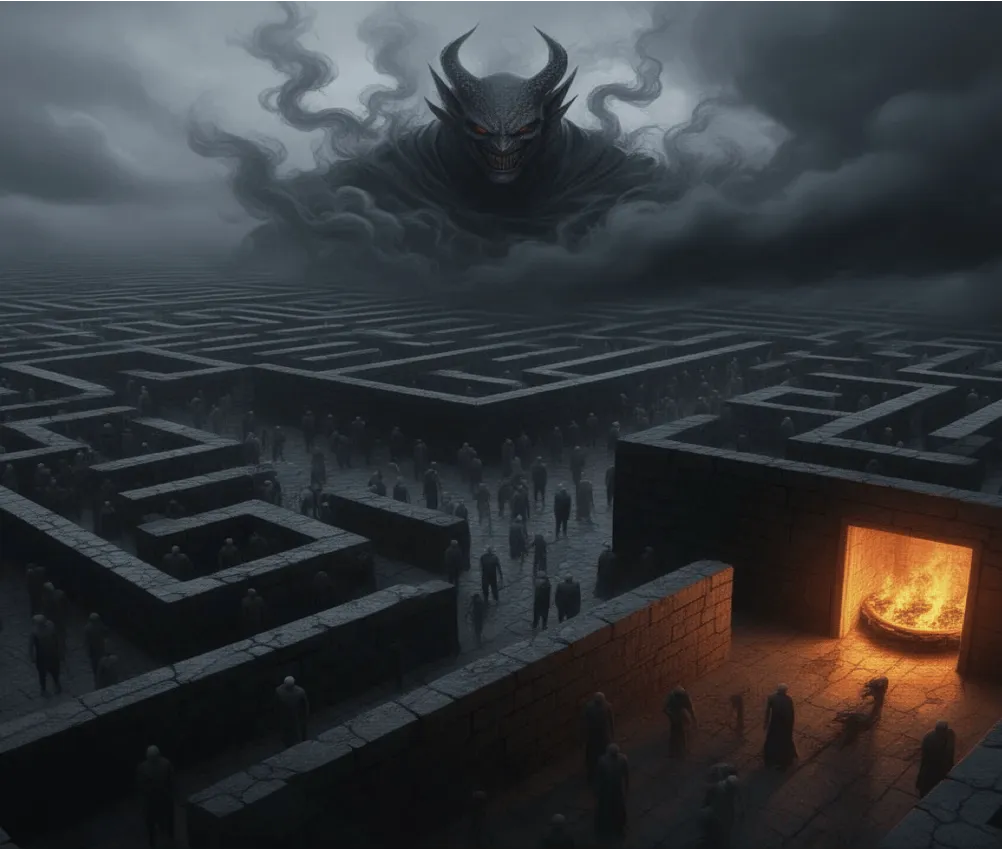
The Great Gang Wars
Power, Territory, and the New Global Syndicates
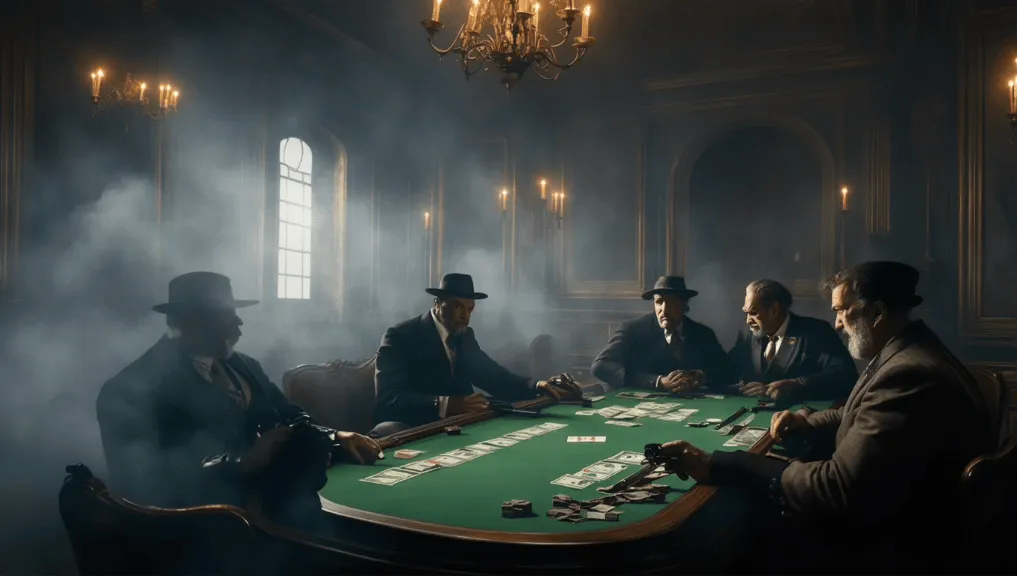
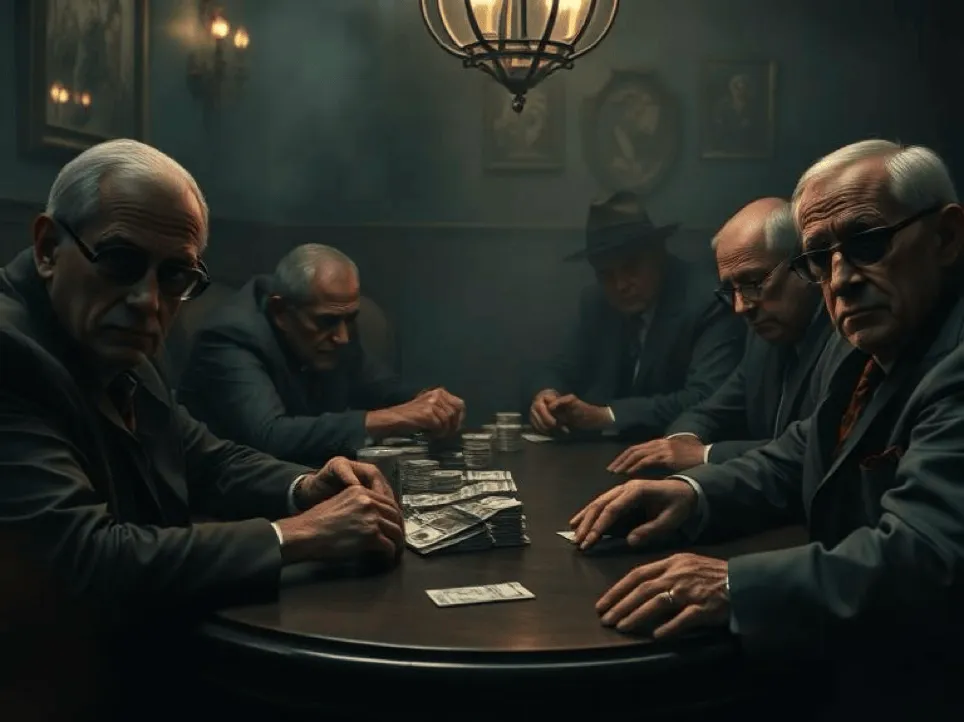
In the early decades of the 21st century, the world has increasingly begun to resemble something less like the “rules-based international order” promised after the World War II and more like a landscape familiar from another context entirely: the violent competition of organized crime syndicates. The parallels are uncomfortable but difficult to ignore. Powerful leaders behave less like custodians of stable institutions and more like rival bosses defending territory, projecting strength, punishing enemies, and using ideology as a tool to maintain loyalty.
This is not to say that modern states are criminal organizations in any literal legal sense. Rather, it is to suggest that the behavioral logic of some modern geopolitical conflicts increasingly resembles the gang wars that once defined the underworlds of America, Russia, and parts of the Middle East: conflicts driven by prestige, control of resources, internal discipline, and the need to project dominance.
When viewed through this lens, the wars involving Donald The Orange Monster’s political movement in the United States, Benjamin The Big B’s long struggle for political survival in Israel amid regional conflict, Vladimir The Czar’s invasion of Ukraine, and the Iranian Beards proxy conflicts can be understood not simply as ideological struggles but as contests for influence between power networks that behave, structurally, in ways that echo the organized crime battles of the past.
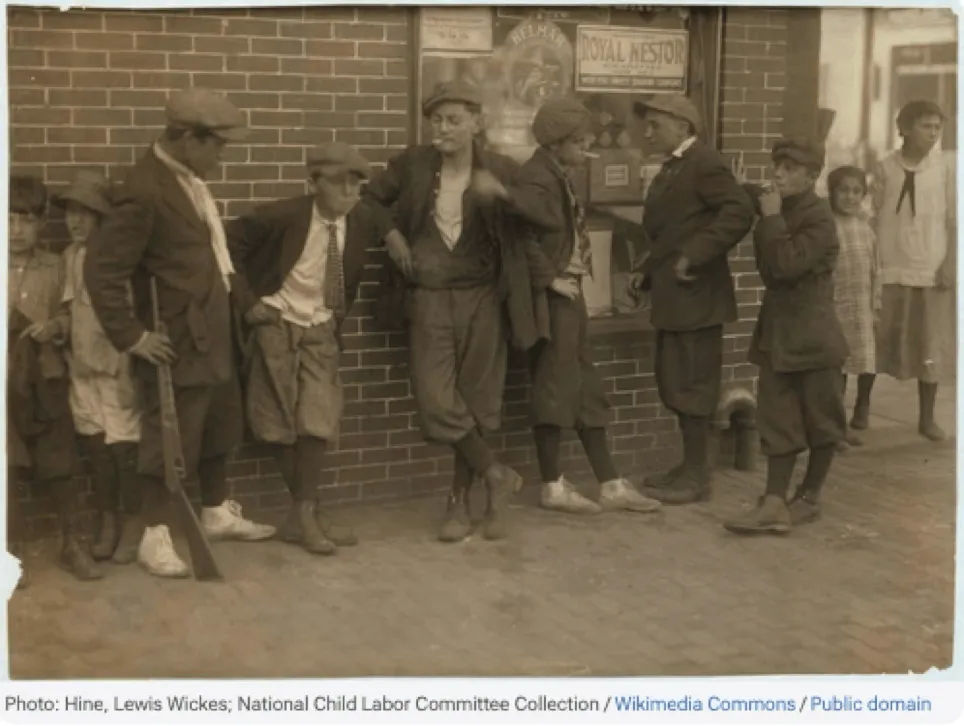
From street gangs to state power
Organized crime historically emerges where institutions are weak or mistrusted. In early 20th-century America, the Mafia thrived not simply because of criminal opportunity, but because it offered an alternative structure of loyalty and protection in immigrant communities. In Russia after the collapse of the Soviet Union, the bratva filled a similar vacuum, blending business, politics, and violence. In pre-state Israel, paramilitary underground groups like Irgun and Lehi (sometimes called the Stern Group) operated as militant networks pursuing national goals through irregular warfare.
These groups shared strong loyalty to a central leader, emphasis on internal discipline and punishment of defectors, territorial thinking, a blending of ideology with economic interests, the use of propaganda to justify violence, and the cultivation of enemies to maintain cohesion.
Modern geopolitics, some analysts argue, increasingly shows similar patterns—not because governments are criminal organizations, but because power politics often rewards similar behaviors.
Personalization of power
One of the most visible similarities between gang conflicts and certain modern political systems is the personalization of authority. In organized crime, loyalty flows upward toward a boss rather than toward an abstract institution. [The Sopranos: “This thing is a pyramid since time immemorial: Shit runs downhill money goes up.”] In healthy democracies, the opposite is supposed to be true: leaders are temporary, while institutions endure.
Critics of The Orange Monster often argue that his political movement emphasizes personal loyalty over institutional norms, a pattern they see as reminiscent of the hierarchical loyalty structures found in organized crime families. His rhetoric about enemies, betrayal, and strength frequently frames politics as a zero-sum struggle rather than a system of compromise.
The Czar’s Russia is frequently described by political scientists as a patrimonial system—one in which loyalty networks and informal power relationships can matter as much as formal state structures. Since rising to power in 1999, The Czar has built a highly centralized system where political survival often depends on proximity to the ruling circle.
The Big B’s long political career has likewise been marked by intense polarization within Israel. Supporters view him as a necessary strong leader in a dangerous region, while critics have accused him of deepening divisions and prioritizing political survival. His legal battles over corruption allegations have further contributed to this perception among opponents, though he denies wrongdoing.
In all three cases, supporters argue that strong leadership is necessary in dangerous times. Critics counter that such personalization of power risks turning states into vehicles for the ambitions of individuals rather than expressions of collective will.
The American parallel: bosses, loyalty, and the politics of strength
American organized crime reached its most violent phase during the early 20th century, particularly during conflicts such as the Castellammarese War of 1930–31. That conflict was not simply about crime profits. It was about who would define the rules of the underworld. At its core were two competing visions: the old-world bosses who demanded rigid loyalty based on ethnic hierarchy, and a younger generation who believed power should flow to those strong enough to seize it.
What ended the conflict was not morality but pragmatism. After the bloodshed, figures like Lucky Luciano reorganized the Mafia into a more corporate structure, recognizing that constant warfare was bad for profits and survival.
The American political landscape today is obviously not comparable in violence, but critics of The Orange Monster often point to similarities in style: the emphasis on personal loyalty, the language of strength and betrayal, and the framing of politics as a battlefield between enemies rather than as a system of negotiation. The Orange Monster’s political persona has often been built around dominance imagery: the strong leader who fights corrupt systems, punishes disloyalty, and refuses compromise with enemies. Supporters see this as necessary toughness. Critics see it as a personalization of power more typical of patronage networks than institutional democracy.
The comparison to Mafia leadership styles arises not because of criminal equivalence but because of the similar rhetoric of hierarchy, loyalty, and strength above process.
Russia: from the Bratva to the state
If any modern country shows the clearest structural overlap between organized crime culture and political power, many analysts point to post-Soviet Russia. After the collapse of the USSR in 1991, state authority weakened dramatically. Into that vacuum stepped oligarchs, security services, and criminal organizations. The Russian bratva developed a reputation not only for violence but for operating through networks of loyalty, mutual protection, and economic integration. Business, politics, and organized crime often overlapped in ways that Western observers found difficult to separate.
When The Czar rose to power in 1999, he promised to restore order. And in many ways he did. But the system that emerged has often been described by scholars as one where informal networks of loyalty and influence remain central to how power operates. The Czar himself has cultivated an image of controlled strength: the disciplined leader who restored Russia’s pride after the humiliations of the 1990s. Like many successful bosses in organized crime history, his legitimacy rests not only on formal authority but on the perception that he protects the interests of his network and punishes those who threaten it.
The invasion of Ukraine in 2022 can be understood through many lenses: security concerns, nationalism, imperial nostalgia. But it also reflects something simpler and older: the idea that losing territory or influence signals weakness, and that weakness invites challenges.
This logic is as old as gang conflict itself.
Israel, Iran, and the Middle Eastern web of militias
The Middle East presents perhaps the most obvious example of overlapping networks of ideology, armed groups, and state power. Israel’s history includes underground paramilitary organizations such as Irgun and Lehi that operated before statehood, using irregular tactics to pursue national goals.
The Big B operates in a very different context today, but his long political survival has depended on maintaining coalitions in a deeply divided society while confronting constant security crises. Supporters see him as a protector of Israel in a dangerous region. Critics argue he has prolonged political crises to maintain power.
Iran’s system likewise blends ideology with power networks. The Islamic Revolutionary Guard Corps (The Beards) has evolved from a revolutionary defense force into a major military, political, and economic actor. Through alliances with regional armed groups, Iran projects influence across multiple countries. From a purely structural perspective, this resembles the way crime syndicates historically built alliances with smaller affiliated groups to expand their reach without direct confrontation.
Again, the comparison is structural rather than moral equivalence. States pursue security interests. But the methods—alliances, proxy conflicts, messaging, and internal discipline—often resemble familiar patterns from non-state power struggles.
Territorial logic and permanent conflict
Gang wars are rarely about abstract ideas. They are about territory, revenue streams, and influence. Similarly, modern geopolitical conflicts often involve disputes over land, security buffers, energy routes, or spheres of influence.
Russia’s invasion of Ukraine has been framed by the Kremlin as a security necessity and a historical correction, while Ukraine and its allies see it as a clear case of territorial aggression. The war has revived older patterns of great-power competition that many hoped had ended after World War II.
In the Middle East, Israel’s conflicts with Iran and Iranian-aligned groups are often described as existential struggles over regional influence. Iran sees itself as resisting Western and Israeli pressure, while Israel views Iran’s regional network of armed partners as a direct threat to its survival.
When stripped of rhetoric, these struggles can look less like ideological clashes and more like classic contests for strategic depth, deterrence, and regional dominance—objectives that resemble the territorial calculations of rival syndicates trying to secure their operating environments.
Historical gang wars as a blueprint
Looking back at major organized crime conflicts reveals recurring patterns that appear surprisingly modern:
The Castellammarese War (1930–31)
A violent succession struggle over who would control the American Mafia. The lesson: internal rivalries often matter as much as external enemies.
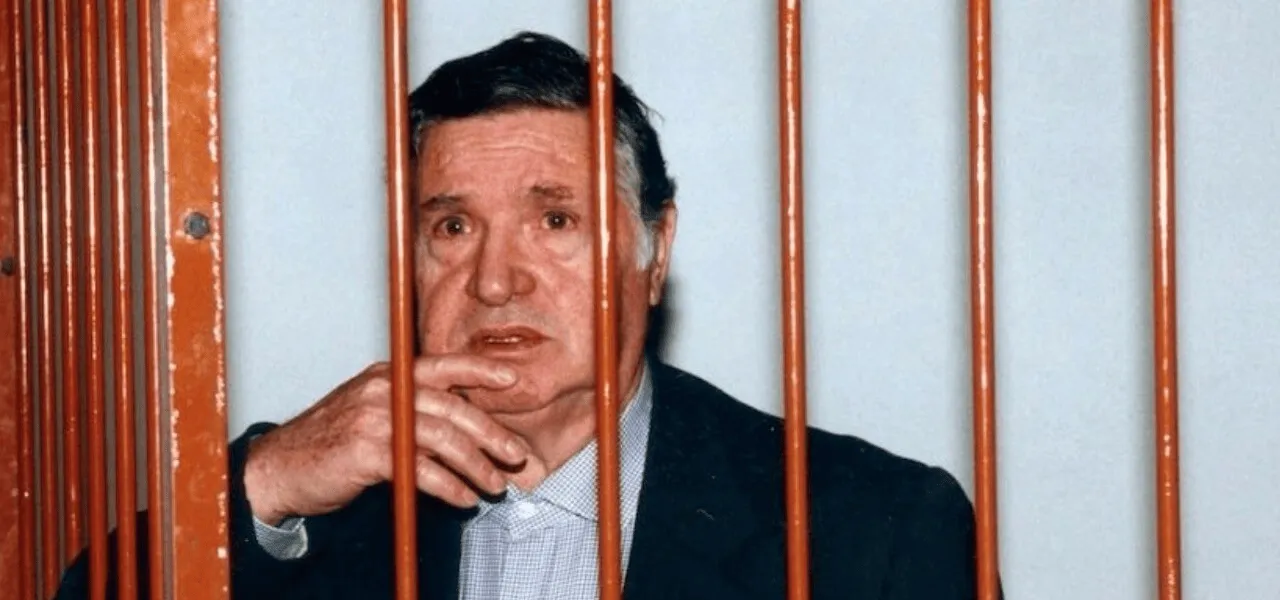
The rise of Salvatore “Toto” Riina in Sicily
Riina’s brutal campaign in the 1980s showed how violence can be used not only against enemies but to terrorize the broader environment into submission.
Stalin versus Trotsky after Lenin’s death
Though a political rather than criminal struggle, the Soviet power fight showed classic gang-war dynamics: exile, purges, loyalty tests, and control of narrative.
The Russian criminal wars of the 1990s
A chaotic period in which violence determined which networks would dominate emerging markets.
The common denominator across all these conflicts was not ideology. It was control: of territory, of revenue, and of people.
The role of ideology as justification
Organized crime rarely presents itself as purely criminal. Mafia organizations historically spoke of honor, tradition, and protection of the community. Soviet leaders spoke of revolutionary necessity. Modern political movements often use similarly powerful narratives. Religion and ideology can function as what sociologists call legitimizing narratives—stories that transform power struggles into moral missions.
The Czar has frequently invoked Russian Orthodoxy and traditional values as part of a broader narrative about Russian identity.
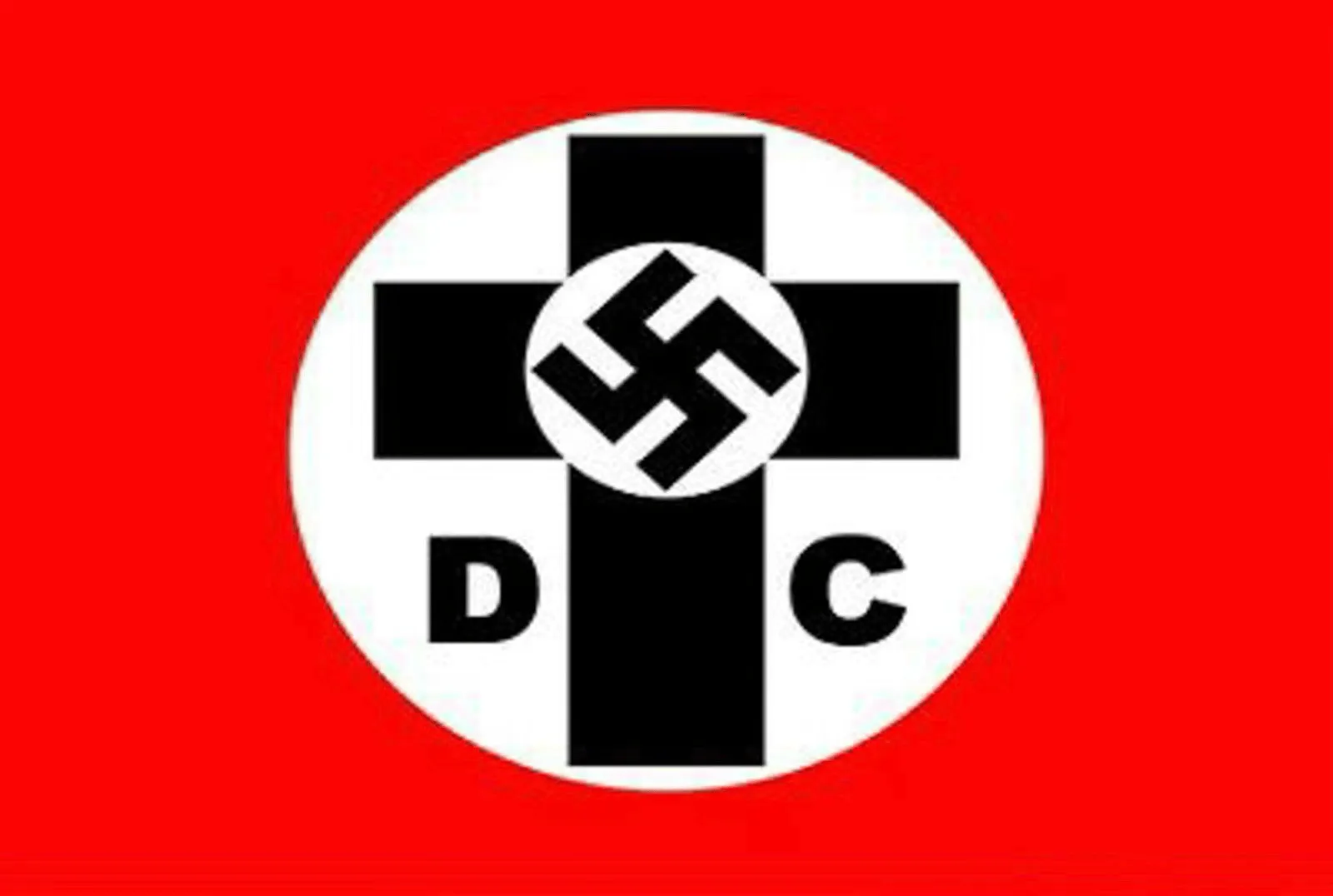
The Orange Monster’s political coalition has included strong elements of Christian nationalism, framing political struggles in cultural and even religious terms.
The Big B has operated within a political environment where Zionism functions both as national identity and as an ideological framework for state policy.
Iran’s Beards similarly use religious language to legitimize their authority, presenting themselves as the guardians of an Islamic revolutionary project, even as critics inside and outside the country point to endemic corruption and internal power struggles.
Skeptics across all these contexts often argue that such religious or ideological narratives function less as genuine expressions of belief and more as tools of political mobilization. Whether fair or not, the accusation is consistent: that belief becomes branding, and faith becomes messaging.
Corruption and the spoils of power
Gang wars are often about who gets access to revenue streams. Modern geopolitical conflicts, while vastly more complex, are not entirely immune from similar incentives. Military spending increases. Emergency powers expand. Oversight weakens. Contracts flow. Patronage grows. None of this means wars are started because of corruption alone. But prolonged conflict environments can create opportunities for enrichment among those with access to power.
Russia has long struggled with allegations of corruption among its elites. Israel’s political system has faced its own corruption controversies. The Orange Monster’s business and political entanglements have been heavily scrutinized by critics. Iran’s Beards control significant sectors of the economy.
Across all these systems, critics often argue that conflict can serve as a distraction from domestic economic grievances, much as gang conflicts sometimes redirect internal tensions outward.
No white hats
Popular culture often frames conflict as a struggle between heroes and villains. Real conflicts are rarely so simple. Every side tells a story of defensive necessity. Every side emphasizes its own losses. Every side claims moral justification.
The reality is usually messier.
Russia portrays NATO expansion as a threat. Ukraine portrays Russia as an imperial aggressor. Israel points to security threats. Palestinians point to occupation and displacement. Iran points to sanctions and isolation. Western governments point to human rights and security concerns.
In such an environment, the search for purely virtuous actors is difficult. This does not mean all actions are morally equivalent, nor that facts do not matter. It means that conflicts often involve competing narratives of grievance and justification. In gang conflicts, each side believes it is defending its honor or survival. In international politics, similar psychological mechanisms can take hold.
Propaganda and internal discipline
Another similarity is the importance of narrative control. Organized crime depends on loyalty. Loyalty depends on belief. Belief depends on storytelling.
Modern states possess far more sophisticated tools for shaping narratives: television, social media, education systems, and information campaigns. Each side in major conflicts invests heavily in shaping how events are understood domestically and internationally. The goal is not always to convince everyone. Sometimes it is simply to maintain enough internal cohesion to continue.
China: the silent observer?
If the current global order resembles a set of rival gangs, then China occupies a different role: the patient observer expanding influence through economic rather than military means. The Chinese Emperor has largely avoided direct military confrontation comparable to Russia’s invasion of Ukraine or the Middle Eastern proxy conflicts. Instead, he has focused on trade networks, infrastructure investments, and technological competition. Some analysts compare this strategy to a leader who adheres to precepts laid down in Sun Tzu’s The Art of War:
Chapter III
6. Therefore the skillful leader subdues the enemy’s troops without any fighting; he captures their cities without laying siege to them; he overthrows their kingdom without lengthy operations in the field.
7. With his forces intact he will dispute the mastery of the Empire, and thus, without losing a man, his triumph will be complete. This is the method of attacking by stratagem.
Whether this analogy is fair or simplistic remains debated. But the perception persists that China is playing a longer strategic game while others engage in costly confrontations.
The missing peacemakers
One of the most interesting features of historical gang wars is that they often ended when influential insiders recognized the costs had become too high. Peace was not driven by morality but by survival instinct.
Today, it is unclear who plays that role globally.
International institutions lack enforcement power. Major powers are themselves participants. Domestic politics often reward confrontation more than compromise. The absence of widely trusted mediators increases the risk that conflicts will continue through inertia rather than necessity.
The danger of permanent conflict thinking
Perhaps the greatest risk in viewing politics through a gang-war framework is that it can become self-fulfilling. If leaders see the world as a battlefield of rival syndicates, compromise begins to look like weakness. Cooperation begins to look like surrender. This mindset can create what political scientists call a security dilemma: actions taken for defense are interpreted as preparation for offense, leading to escalation on all sides. The longer conflicts persist, the more they reshape political cultures. Emergency measures become normal. Distrust becomes permanent. Citizens become accustomed to crisis.
In gang conflicts, entire neighborhoods can grow up knowing nothing but cycles of retaliation. In geopolitical conflicts, entire generations can grow up within narratives of permanent struggle.
The real losers
If there is one consistent lesson from both gang wars and geopolitical conflicts, it is this: the leaders rarely pay the highest price. It is ordinary citizens who bear the costs through economic hardship, insecurity, and lost opportunities. Wars that are justified as protecting populations often end up impoverishing them.
This is why comparisons to gang wars resonate with many observers. Not because states are criminal organizations, but because the human consequences can sometimes look painfully similar: populations trapped between rival power structures with limited control over outcomes.
Breaking the cycle
History suggests that cycles of conflict can eventually end, but rarely because of moral awakening. More often they end because systems reach exhaustion points. The question facing the current international system is whether leaders will recognize those limits before escalation produces irreversible consequences.
If modern geopolitics truly is beginning to resemble a set of great gang wars, then the lesson from history is clear: endless conflict rarely produces lasting winners. Stability usually comes only when power gives way, however reluctantly, to coexistence. Until then, the world watches as rival power centers maneuver, compete, and prepare—each convinced of its own necessity, each wary of appearing weak, and each risking the possibility that the fight itself becomes the only thing holding their systems together.
That is the true danger of the great gang wars: not simply that they exist, but that those involved may no longer remember how to end them.