Il Condor
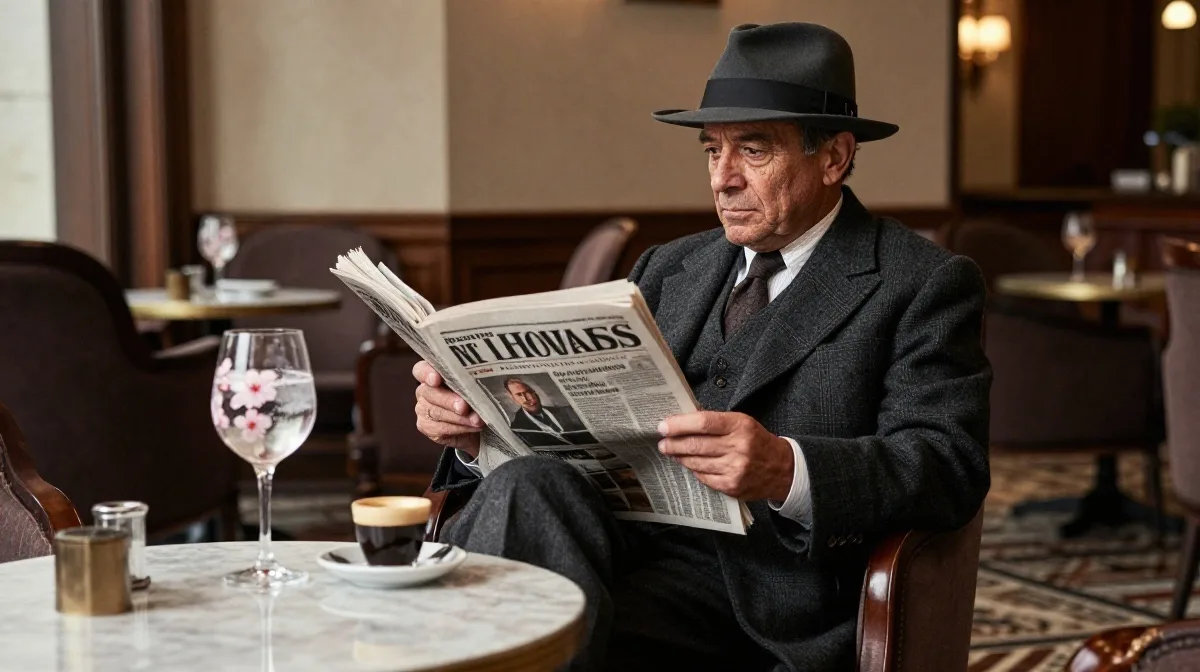
The first time I heard about Il Condor, it piqued my curiosity.
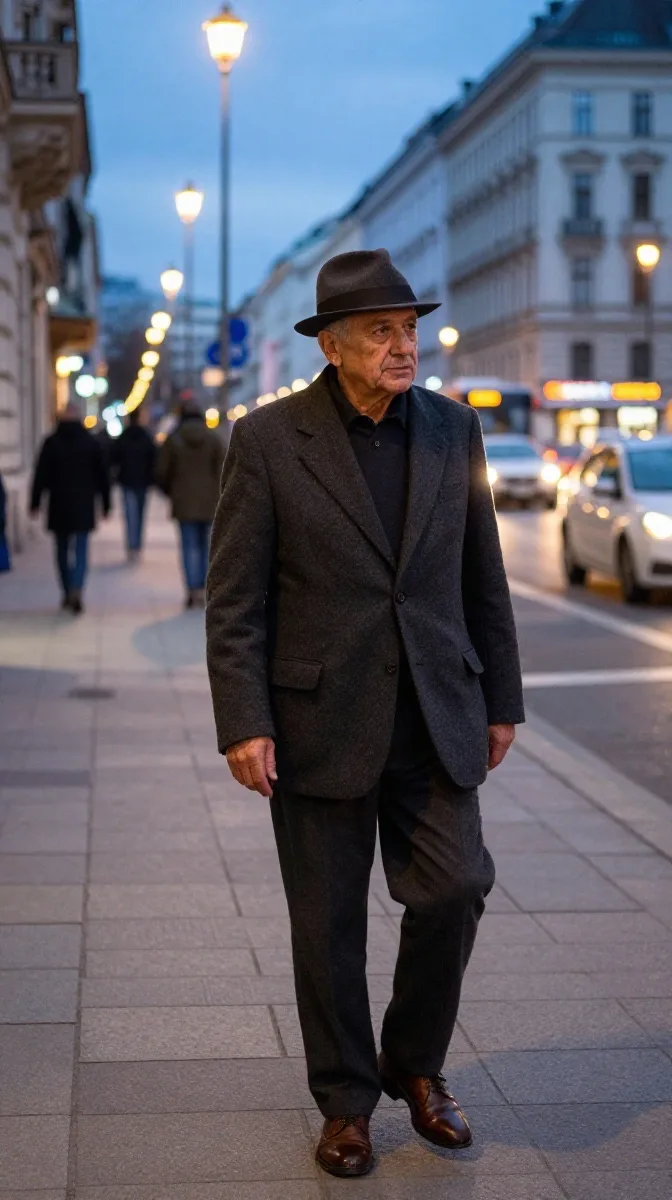
Every morning he walked from his room near the Westbahnhof to the center of Vienna. A rather short man—compared to us northerners—tan, with wrinkles around his eyes, as if he spent many years peering into the distance over water, under a sun that never gives up.
For that long year he spent in my city, he dressed better than his circumstances seemed to allow: Clean cream trousers that summer, then a charcoal wool suit in winter, with a pair of sturdy well-polished brown shoes which he wore regardless of the weather. His winter suit jacket was an old Italian thing with wide lapels, no longer in fashion. He wore it with a quiet, confident dignity, that of a retired diplomat who once represented a country that had changed, that had once been a monarchy, but then had exiled its king.
I was never told why he couldn’t go back to Italy, so it seemed Vienna was his only option if he wanted to live in a city with international flair, a city with fairer weather than other cities north of the Alps.
Vienna, as far as I could discern, dazzled him. He loved hotel lobbies. Once he said to me: “A hotel lobby is the last democratic institution.” I never asked what he meant by that, I just accepted his statement as a matter of fact, spoken by a man who knew from experience what he was talking about. Most often he preferred to sit in the Imperial or the Bristol. He would order Thomas Henry Cherry Blossom Tonic, the cheapest thing that permitted him to remain in a seat at a table for an afternoon. If he happened to arrive early, after breakfast, an espresso could buy him nearly two hours.
He read newspapers abandoned by businessmen and loved to watch Americans argue with receptionists. He was openly amused by the Russians because they seemed to always arrive with three or four enormous suitcases. Once, when a Japanese orchestra was staying at the hotel, a look of amazement spread across his face when he saw how quickly they disappeared into the elevators. I could see that he was occasionally tempted to say something to beautiful women who waited impatiently near him for men who were always late. He never spoke to them however.
I met him properly in October of that year.
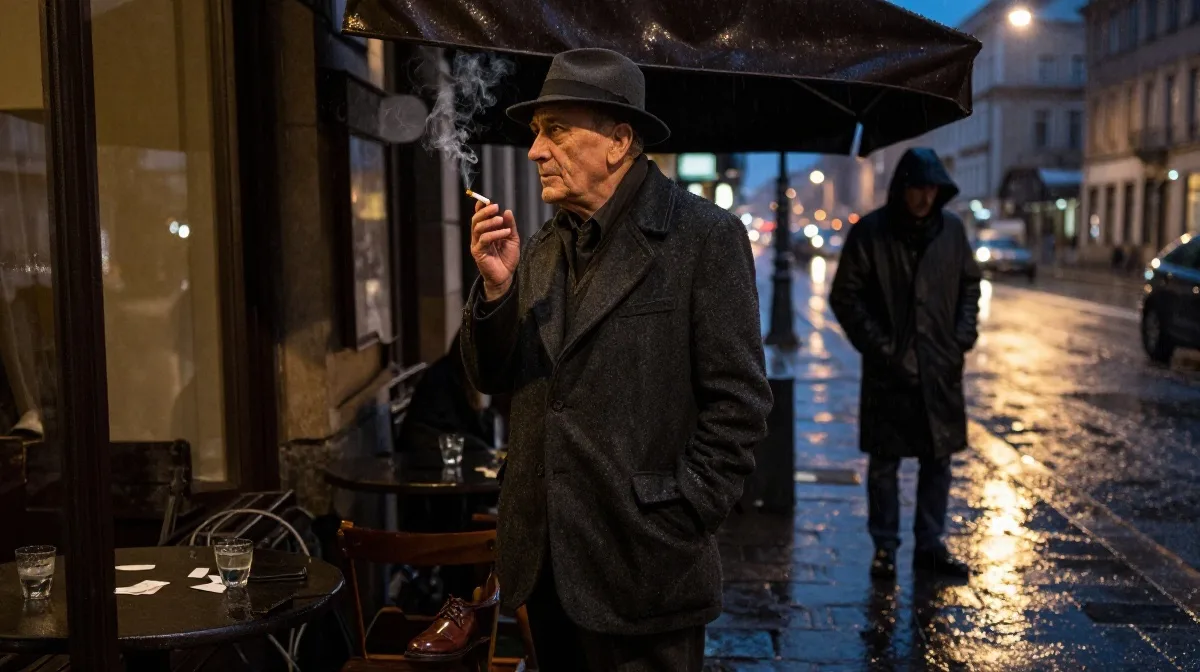
Rain painted Ringstrasse a black that reflected the street lamps. The carriage horses parked outside the Hofburg smelled of wet leather, of fresh manure, their heads lowered, manes damp, though their rain tarps covered most of the rest of their bodies. We stood together beneath an awning. Big rain drops hit the canvas, a dull gunfire over our heads. He smoked his cigarette down to his yellow stained fingers. I stood far back against the wall, my clenched fists in the pockets of my raincoat. I felt the cold more that year, since I had returned in September from North Africa.
“You know Bari?” he asked me. He studied my profile.
I said I had been there once a long time ago.
“Then you don't know Bari.”
That was the beginning of what I am going to call our friendship.
His real name was Vittorio Bellomo.
Vienna, he told me, was the perfect city for an exile because everyone here seemed to be waiting for an empire to return. Maybe we were.
Every Thursday, shortly after six, he crossed the Danube Canal and entered a small telephone shop owned by a Serbian man named Milan. He always remained inside for exactly seventeen minutes. I know this because I timed him. For several months before I was sent to Tunis, I followed him everywhere. At the Naschmarkt he inspected peaches he never bought. Outside the opera, during intermission, he would linger to mix with smokers in formal attire who emerged whenever the doors opened. Afterwards he would follow them in and find an empty seat, or if it was sold out, stand against the back wall in the upper ring so he could enjoy the second part of the performance. He possessed a peculiar talent: he could inhabit expensive places without ever appearing poor.
On Kärntner Straße, from time to time he greeted men I never saw a second time—men in hats with brims that threw a shadow which obscured their faces, men who turned away as if they didn’t want to recognize his presence. He was unfazed by any apparent rejection. I was never close enough to hear what he said, or if they ever made some kind of reply. This all happened long before the era of the cell phone and the new bugging devices that allows us to discretely listen to anyone’s conversation at any time.
One Thursday in December, as usual, shortly after six, he crossed the canal and went into Milan’s telephone shop. Twenty minutes passed. Then thirty. At forty minutes, I crossed the street. The shop was empty. There was a chair overturned behind the counter and the telephone receiver hung from its cord over the front of the counter. A small radio played an Italian song I remembered from my childhood, one year when my parents took me on vacation to the Starnberger See: Mina singing Stessa spiaggia stesso mare.*
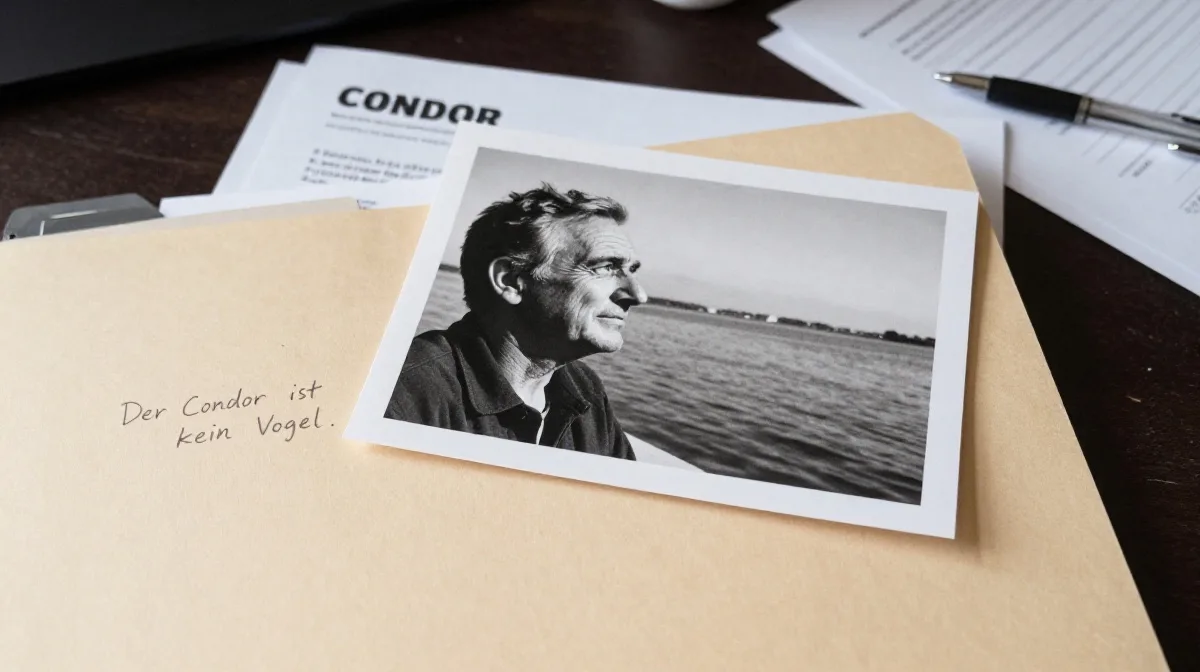
On the counter lay Vittorio's dark gray fedora. I picked it up. Beneath it was an envelope. My name was on the front. I opened it and found a photograph: seven men standing on a pier. Long sandy beaches in the background, and hills that rose in the distance under a blue Mediterranean sky. They were young, sunburned, laughing at the camera. Behind them was a white fishing boat with a black stripe along its hull. The name on its prow was Volante.
Vittorio was easy to recognize in the photo. He was slightly taller than the man beside him. The man’s face had been scratched away with something sharp. On the back of the photograph a steady hand had written: 12 August 1978. Beneath it, in careful handwriting that revealed a person who had learned well in grammar school how to write in script, but had not used the skill often enough to make the letters flow easily into one another: Il Condor.
Nobody in my department knew why they called him Il Condor. There were stories, naturally. There are always stories about men like him who arrive in our city without luggage or a reservation in a hotel. Some of my colleagues said he must have been a smuggler who worked on the Adriatic, who maybe transported cigarettes and other goods between Bari and the Dalmatian coast. Some of the younger ones, in other departments, not mine, believed he had once been a famous cyclist. I found no photograph of him on a bicycle. An old Croatian waiter I talked to at Café Europa insisted that the Il Condor name came from the way he watched people: motionless for hours, then suddenly attentive when he saw something he wanted to pursue.
All pure speculation.
I put that photo from Milan’s telephone shop in a folder, and on the cover under his name I wrote: Der Condor ist kein Vogel.
*Stessa spiaggia stesso mare
Per quest'anno, non cambiare
Stessa spiaggia, stesso mare
Per poterti rivedere
Per tornare, per restare insieme a te
E come l'anno scorso
Sul mare col pattino
Vedremo gli ombrelloni lontano lontano
Nessuno ci vedrà, vedrà, vedrà
©Danny Antonell
All Rights Reserved
Comments
No comments yet — I’d be glad if you wrote the first one.